


Aluminium tilt and turn windows have one frame, two opening modes. Tilt the handle upward and the top of the sash opens inward a few inches for ventilation — no draft, no security risk. Turn the handle sideways and the whole sash swings inward like a door for cleaning or emergency egress. This guide explains where they work, what they cost, and how aluminium compares to uPVC for tilt and turn.
How do tilt and turn windows work?
nnn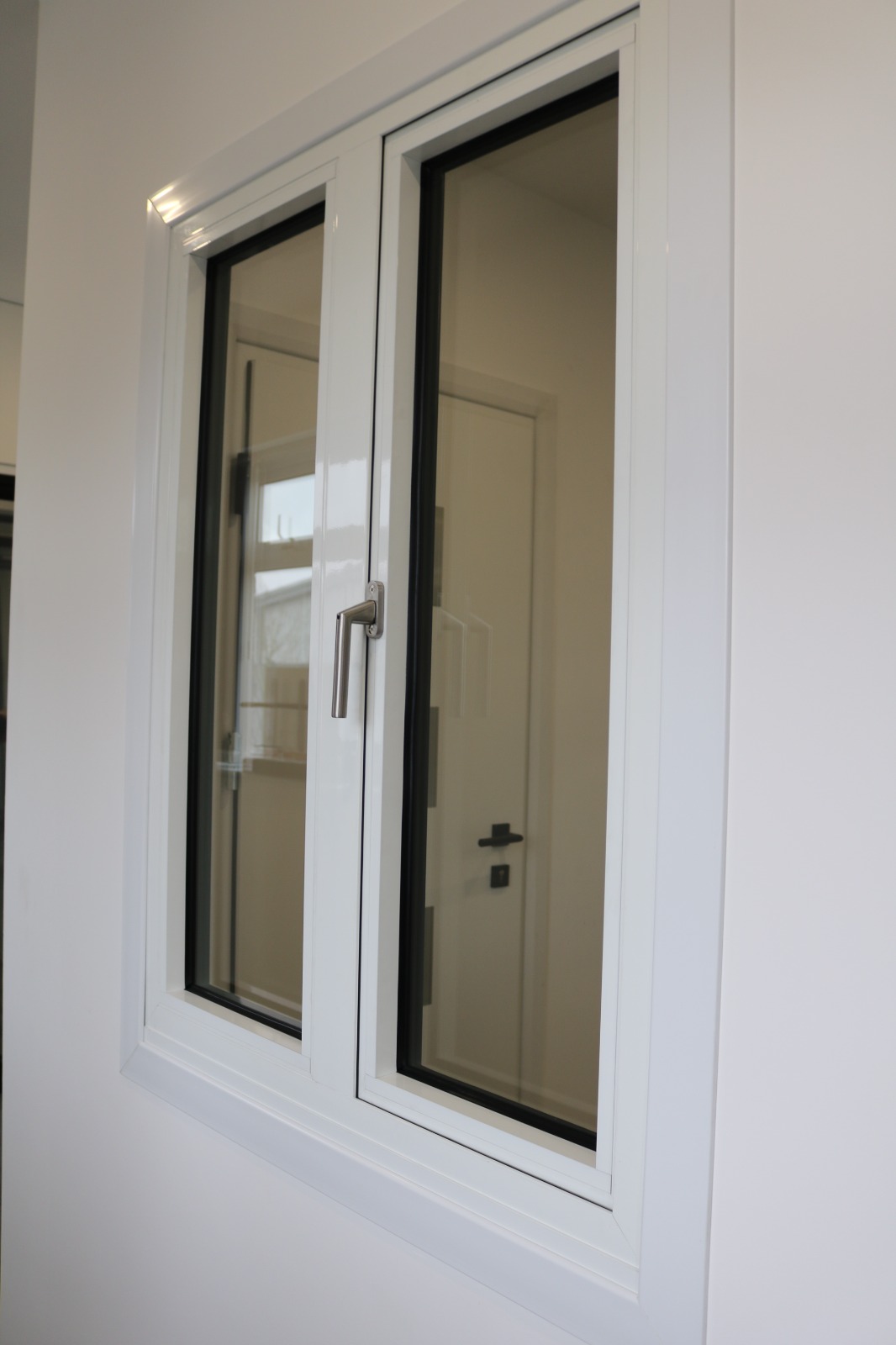
The hardware is a single multi-point locking mechanism with two positions. In the closed position, the frame locks fully at multiple points around the perimeter. Turn the handle 90 degrees and the bottom hinge takes the load — the sash tilts inward from the top, leaving a gap of around 100mm at the top of the frame. Turn the handle 180 degrees and the side hinge takes the load — the sash swings fully inward on a vertical axis, in the same plane as an inward-opening door.
The tilt position is by far the most used. It provides consistent ventilation without the security risk of an open casement window. The turn position is primarily for cleaning the outer face from inside, and for building regulations compliance as an emergency escape route on upper floors.
Where aluminium tilt and turn windows work best
They suit specific situations well and less well in others.
| Situation | Tilt and turn | Standard casement |
|---|---|---|
| Upper floor, cannot clean outside | Excellent | Poor |
| Apartment or flat conversion | Excellent | Good |
| Building regulations escape window | Good (turn mode) | Good |
| High-traffic ventilation (kitchen) | Excellent (tilt mode) | Good |
| Ground floor living room | Good | Excellent |
| Conservation area front elevation | Rarely specified | Usually preferred |
The main consideration on ground floor front elevations is that an inward-opening sash takes room space when open in turn mode. For a room that is used as an open-plan kitchen-dining space with furniture close to the windows, outward-opening casements are usually more practical.
Aluminium tilt and turn window cost
Tilt and turn windows cost around 15 to 20% more than a standard casement of the same size, because the multi-position hardware is more complex. Aluminium carries the slim sightline advantage regardless of opening type.
| Size | Aluminium tilt and turn (supply and fit, London) |
|---|---|
| 600 x 900mm | £550 to £750 |
| 1000 x 1200mm | £900 to £1,300 |
| 1200 x 1500mm | £1,100 to £1,500 |
| 1500 x 1800mm (larger) | £1,400 to £1,900 |
Prices include supply, installation and a 10-year guarantee. The chargeable survey (from £500) is priced separately and credited against the job on order. Standard double glazing with low-E coating is included.
Aluminium vs uPVC tilt and turn windows
Both materials work mechanically for tilt and turn. The difference is frame width, colour range and longevity. Aluminium frames are 65 to 80mm wide. uPVC tilt and turn frames typically run 100 to 120mm. For a flat conversion or modern extension where slim sightlines matter, aluminium is the standard choice.
| Aluminium | uPVC | |
|---|---|---|
| Frame profile width | 65 to 80mm | 100 to 120mm |
| Colour options | Any RAL colour | Standard range |
| Weight per sash | Lighter for same size | Heavier |
| Expected lifespan | 45+ years | 25 to 30 years |
| Conservation area acceptance | Often approved | Often refused |
ALUNA systems and what it means for the window
Zeenee sources raw aluminium from ALUNA (Alunet Systems), one of the most widely used aluminium systems companies in the UK. The finished tilt and turn window is manufactured to your specification and fitted by our own team. The thermal break in ALUNA profiles meets current building regulations for replacement windows across all zones in England and Wales.
Frequently asked questions about tilt and turn aluminium windows
Are tilt and turn windows harder to use than casements?
The handle position is different from a casement. After one use most people find the two positions intuitive. The common mistake is trying to tilt a window that is in turn mode — the handle will not move until the sash is fully closed, which prevents the mechanism from being damaged.
Are tilt and turn windows as secure as casements?
Yes. Modern tilt and turn hardware locks at multiple points around the frame perimeter. The tilt position engages at least two lock points, so a window left in tilt mode overnight is not a security risk in the way a propped-open casement would be. PAS 24 compliant hardware is available and is standard on our installations.
Can tilt and turn windows satisfy building regulations for escape?
Yes, in turn mode. The building regulations require a clear opening of at least 0.33 m² with a minimum dimension of 450mm on bedrooms above ground floor. A tilt and turn window in turn mode opens the full sash inward, meeting the requirement on most standard window sizes.
Do tilt and turn windows have more maintenance?
The hardware is more complex than a casement, so the servicing interval is roughly the same but the engineer needs to check two sets of locks rather than one. In practice this is not a meaningful difference for a domestic installation. We cover hardware as well as the frame and glass under our 10-year guarantee.
See our aluminium windows London page, our guide to black aluminium windows, how to choose aluminium windows, and recent installations across London.